

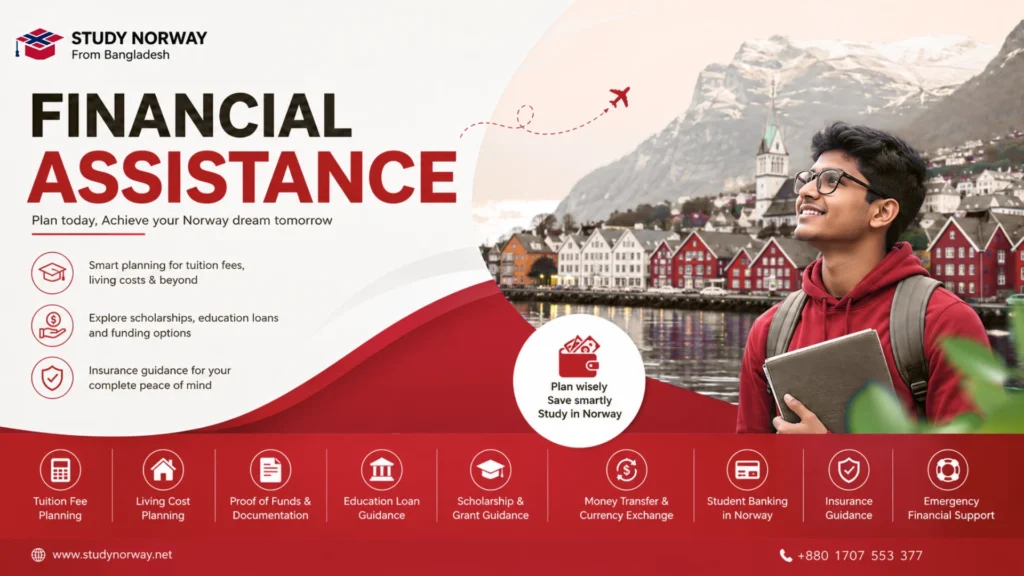

Studying in Norway is a significant investment, and proper financial planning is one of the most important steps before starting your academic journey. Financial assistance for studying in Norway is not limited to scholarships. It also includes student insurance, budgeting, accommodation expenses, proof of financial support, part-time work opportunities, and emergency financial planning to help you manage your education with confidence.
Whether you are applying for a bachelor’s, master’s, PhD, or exchange programme, understanding your financial responsibilities before departure can help you avoid unexpected expenses after arriving in Norway. International students should plan for tuition fees (where applicable), monthly living expenses, accommodation, health and travel insurance, transportation, study materials, and emergency funds while ensuring they meet the financial requirements set by the Norwegian Directorate of Immigration (UDI) for a student residence permit.
At Study Norway BD, we help students from Bangladesh understand every aspect of financial planning before studying in Norway. From explaining student insurance options and scholarship opportunities to estimating living costs and preparing financial documents, our goal is to help you make informed decisions using reliable information from official Norwegian authorities and trusted educational resources.
Planning your finances before travelling to Norway is one of the best ways to reduce financial stress and focus on your academic success.
Student insurance is one of the most important forms of financial protection for international students studying in Norway. While Norway has an excellent public healthcare system, not every international student is automatically covered from the day they arrive. The type of insurance you need depends on your nationality, length of stay, and eligibility for the Norwegian National Insurance Scheme (Folketrygden).
Having the right insurance can help protect you from unexpected medical expenses, travel disruptions, lost baggage, damaged electronics, personal liability claims, and accidents throughout your academic journey. Planning your insurance before travelling to Norway can reduce financial risks and help you focus on your studies with greater peace of mind.
| Quick Information | Details |
|---|---|
| Recommended Time to Purchase Insurance | Before travelling to Norway |
| Students Staying Less Than 12 Months | Private health insurance is generally recommended for the entire stay |
| Students Staying 12 Months or Longer | May become eligible for the Norwegian National Insurance Scheme (Folketrygden) after meeting applicable registration requirements |
| EU/EEA Students | May use a valid European Health Insurance Card (EHIC) or Global Health Insurance Card (GHIC), depending on eligibility |
| Medical Emergency | 113 |
| Police Emergency | 112 |
| Fire Emergency | 110 |
Studying abroad involves more than tuition fees and monthly living expenses. Unexpected situations such as illness, hospitalisation, travel delays, lost luggage, damaged laptops, or accidental damage to rented accommodation can create significant financial pressure if you are not properly insured.
A suitable insurance policy can help reduce these financial risks while providing additional support during emergencies.
| Situation | How Insurance Can Help |
|---|---|
| Medical emergencies | Helps cover eligible medical treatment and hospital expenses according to the policy |
| Trip cancellation or travel delays | May reimburse eligible travel-related expenses depending on policy terms |
| Lost or delayed baggage | Helps replace essential personal belongings |
| Damaged laptop or study equipment | May cover repair or replacement costs based on policy coverage |
| Personal liability | Helps protect against accidental damage to another person’s property or injury claims |
| Winter sports accidents | Additional protection may be available for skiing, snowboarding, and outdoor activities if included in the policy |
The right student insurance helps protect your finances, allowing you to focus on your education instead of unexpected expenses.
Health insurance requirements vary depending on your nationality and the duration of your stay in Norway.
| Student Category | General Insurance Guidance |
|---|---|
| Non-EU/EEA Students (Stay under 12 months) | Arrange private health insurance covering your entire stay in Norway. |
| Non-EU/EEA Students (Stay 12 months or longer) | Private insurance is generally recommended until you become eligible for the Norwegian National Insurance Scheme (Folketrygden), where applicable. |
| EU/EEA Students | A valid EHIC or GHIC may provide access to necessary healthcare, but additional private insurance is recommended for travel, baggage, personal liability, and other benefits not covered by public healthcare. |
| Exchange Students | Insurance requirements depend on your university, programme duration, and nationality. |
When comparing health insurance, look beyond the premium. Review coverage for:
Every student’s situation is different. Your insurance needs depend on your study programme, accommodation, travel plans, and lifestyle.
| Insurance Type | Typical Protection |
|---|---|
| Health Insurance | Medical treatment, hospitalisation, emergency healthcare, and eligible prescription medication |
| Travel Insurance | Trip cancellation, travel delays, missed connections, and baggage protection |
| Personal Liability Insurance | Accidental damage to another person’s property or injury claims |
| Contents Insurance (Innboforsikring) | Protection for personal belongings inside your accommodation, including furniture, clothing, bicycles, and study equipment |
| Electronics Insurance | Laptops, mobile phones, tablets, cameras, and other valuable study equipment |
| Winter Sports Insurance | Skiing, snowboarding, hiking, climbing, kayaking, and selected outdoor activities are covered by the policy |
| Accident & Disability Insurance | Financial benefits for accidental injury, permanent disability, and eligible accident-related dental treatment depending on policy terms |
Choosing the cheapest policy does not always provide the best protection. Before purchasing insurance, compare the policy carefully and understand what is included and excluded.
Important Things to Check
Important: Public healthcare does not automatically replace private travel insurance, baggage protection, electronics insurance, personal liability insurance, or winter sports coverage. Always understand what your insurance policy covers before travelling to Norway.
Depending on your nationality and length of stay, you may need to demonstrate appropriate health or travel insurance during your student residence permit application or before entering Norway.
Students planning long-term studies are generally encouraged to maintain private insurance until they become eligible for public healthcare where applicable. Keep your insurance certificate, emergency assistance numbers, and policy documents easily accessible while travelling.
Always verify the latest requirements through the Norwegian Directorate of Immigration (UDI) before submitting your student residence permit application.
If you need to submit an insurance claim during your studies, acting quickly and keeping proper documentation can make the process smoother.
Most insurers will typically require:
Study Norway BD helps students understand insurance terminology, compare different types of coverage, prepare required documentation, and make informed insurance decisions before travelling to Norway.
We do not sell, underwrite, or issue insurance policies. Our role is to provide independent guidance and practical information to help students choose suitable insurance based on their study plans, travel arrangements, and budget.
For the latest regulations and healthcare information, always refer to official Norwegian authorities:
These official sources provide the most up-to-date information regarding health insurance, public healthcare eligibility, and student residence requirements in Norway.
Although Norway has introduced tuition fees for many international students outside the EU/EEA, scholarships and financial assistance opportunities are still available through selected universities, government-funded programmes, research institutions, and international organisations. However, scholarships are often highly competitive and may only cover part of your tuition fees or living expenses.
Understanding the different types of financial assistance available can help you build a realistic financial plan before beginning your studies.
Many Norwegian universities offer scholarships, tuition fee reductions, or funding opportunities for outstanding international students. Eligibility, funding amount, and application deadlines vary by institution and study programme.
Scholarships may be awarded based on:
Students should always review the official scholarship information published by their chosen university.
Students participating in eligible exchange programmes may receive financial support through Erasmus+, one of Europe’s largest education funding programmes. Depending on the programme, Erasmus+ funding may help cover travel expenses, living costs, or mobility grants during your study period.
Many doctoral (PhD) positions in Norway are fully funded and treated as paid employment. Depending on the university and research project, funding may include:
Funding conditions vary between universities and research institutions.
Some students finance their education through external scholarships, government sponsorships, employer sponsorships, educational foundations, or private organisations. These opportunities differ by country, academic background, and field of study.
Students from Bangladesh should also explore scholarship opportunities offered by international organisations and local funding bodies before applying.
Many students assume scholarships are the only form of financial support available, but financial assistance is much broader.
| Scholarships | Financial Assistance |
|---|---|
| Tuition fee support | Student insurance planning |
| Merit-based awards | Living cost planning |
| Research funding | Monthly budgeting |
| Mobility grants | Accommodation budgeting |
| University-specific awards | Emergency financial preparation |
| External sponsorships | Part-time work planning |
A successful financial plan usually combines multiple sources of support rather than relying on a single scholarship.
Preparing early can significantly improve your chances of securing financial support.
Before submitting scholarship applications, make sure you:
Many scholarship deadlines close several months before the academic intake, so early preparation is highly recommended.
Study Norway BD helps students identify suitable scholarship opportunities, understand eligibility requirements, prepare application documents, and build a realistic financial plan before studying in Norway.
Our guidance includes scholarship research, funding strategy, budgeting advice, and application planning, helping students make informed decisions based on their academic goals and financial circumstances.
Before applying for a student residence permit, international students should understand the financial requirements for studying in Norway. In addition to tuition fees (where applicable), students must demonstrate that they have sufficient funds to support their living expenses during their stay.
Financial planning is not only important for meeting immigration requirements but also for managing everyday expenses after arriving in Norway. A well-prepared budget can help reduce financial stress and allow you to focus on your studies.
A complete financial plan should consider all major study-related expenses, including:
Planning these costs helps you avoid unexpected financial difficulties during your studies.
Although living costs vary by city and lifestyle, international students should budget for the following categories:
| Expense Category | Typical Monthly Cost (NOK) |
|---|---|
| Accommodation | 5,000-13,500 |
| Food & Groceries | 2,500-4,500 |
| Public Transport | 500-900 |
| Mobile & Internet | 300-700 |
| Study Materials | 300-1,000 |
| Personal Expenses | 1,000-2,500 |
Note: Actual expenses depend on the city, accommodation type, and personal lifestyle. Students living in Oslo generally spend more than those studying in smaller cities.
When applying for a Norwegian student residence permit, students may be required to demonstrate that they have sufficient financial resources to support themselves during their studies, in accordance with the latest requirements published by the Norwegian Directorate of Immigration (UDI).
Proof of financial support may include:
Always check the latest financial documentation requirements directly with UDI before submitting your residence permit application, as requirements may change.
Good financial planning starts before you leave Bangladesh. Consider these practical tips:
Proper financial planning helps you stay focused on your education while reducing financial uncertainty throughout your study journey.
Many international students choose to work part-time while studying in Norway to help manage their daily living expenses and gain valuable international work experience. While part-time employment can provide additional income, it should be considered a supplement to your financial plan rather than your primary source of funding.
A successful study experience begins with proper budgeting, adequate savings, and realistic financial expectations before arriving in Norway.
Many international students holding a valid student residence permit may be allowed to work part-time during their studies, provided they comply with the conditions of their residence permit and Norwegian regulations.
Part-time employment can help students:
Always verify the latest work regulations and permit conditions through the Norwegian Directorate of Immigration (UDI) before accepting employment.
Depending on your qualifications, language skills, and location, students may find opportunities in sectors such as:
Some jobs may require Norwegian language skills, while others, particularly in international environments, may be available in English.
Living in Norway can be expensive, but careful financial planning can help you stay within your budget.
Small savings each month can make a significant difference over the course of your studies.
Unexpected expenses can arise at any time, including medical emergencies, travel disruptions, accommodation issues, or replacing essential study equipment.
Before travelling to Norway, consider setting aside funds for:
Having an emergency fund provides greater financial security and reduces stress during your studies.
Use this checklist to make sure you’re financially prepared before travelling to Norway.
Planning your finances for studying abroad can be challenging, especially when balancing tuition fees, living expenses, student insurance, accommodation, scholarships, and student residence permit requirements. Study Norway BD provides personalised guidance to help students from Bangladesh prepare financially before starting their academic journey in Norway.
Our goal is to help you understand your financial responsibilities, identify suitable funding opportunities, and make informed decisions using reliable information from official Norwegian authorities and higher education institutions.
| Service | How We Help |
|---|---|
| Student Financial Planning | Help estimate tuition fees, living expenses, and overall study budget. |
| Scholarship Guidance | Identify suitable scholarship opportunities and explain eligibility requirements. |
| Student Insurance Guidance | Explain health, travel, liability, contents, and electronics insurance options. |
| Proof of Financial Support | Guide students in preparing financial documents required for their student residence permit application. |
| Accommodation Budget Planning | Estimate housing costs and help students plan realistic monthly expenses. |
| Pre-Departure Financial Preparation | Help students prepare for banking, currency exchange, emergency funds, and essential financial planning before travelling. |
Students trust Study Norway BD because we focus on providing practical, transparent, and up-to-date guidance throughout the financial planning process.
Our Approach
Rather than recommending one solution for every student, we help you evaluate different options based on your programme, study duration, destination city, and budget.
Financial requirements, scholarship availability, insurance policies, and immigration regulations can change over time. For this reason, Study Norway BD always encourages students to verify important information through official sources before making financial decisions.
Throughout our guidance, we reference trusted organisations such as:
Using official information helps students make informed decisions and prepare confidently for studying in Norway.
Whether you need guidance on student insurance, scholarships, budgeting, proof of financial support, accommodation costs, or overall financial planning, Study Norway BD is here to support you throughout your study abroad journey.
Book a free consultation today and take the first step toward building a confident financial plan for studying in Norway.
Find answers to the most common questions about financial assistance, student insurance, scholarships, budgeting, and financial planning for studying in Norway from Bangladesh.
Block # F, House # 61(1st Floor), Flat # A, 1 Rd 8, Banani, Dhaka-1213
Sat - Thu : 10:00 AM to 07:00 PM

